
Discover What Your Minerals May Be Telling You
Hair Tissue Mineral Analysis (HTMA)
Looking for answers when you know something isn’t quite right?
Fatigue and low energy
Difficulty losing weight
Stress and burnout
Poor sleep
Hormonal imbalance
Brain fog
Mood fluctuations
Reduced resilience
Hair Tissue Mineral Analysis (HTMA) provides a deeper look into mineral balance and stress patterns that may be influencing:

What Your Hair Can Reveal About Your Health
If you’ve ever had blood tests come back “all normal,” yet you still feel tired, flat,, fatigued with low energy, or just not yourself? You’re not imagining it. Sometimes the real story sits a little deeper.
Hair Tissue Mineral Analysis (HTMA) offers a different perspective. It looks at what is happening inside your cells: your long-term mineral balance, metabolic patterns, and even how your body is coping with stress.
Here’s the thing, your body will always work hard to keep your blood levels stable, because doing this is vital for survival. But to achieve this, it can draw nutrients out of your tissues which then quietly depletes your reserves without showing any red flags on a blood test.
Think of it like this:
Blood is the highway - it shows what is moving around right now.
Hair is the car park - it shows what is being stored (or lost) over time.
By looking at both, we get a much clearer picture of what’s really going on. HTMA often picks up early signs of imbalance, long before things get serious or before symptoms become overwhelming.
HTMA is not a replacement for blood testing. It is however a powerful addition that helps uncover why you might be feeling off, even when everything “looks fine.”
FAQs
Can I use this with my nutritional programme?
1
The Hair Tissue Mineral Analysis (HTMA) works well alongside your personalised nutrition programme to give optimal results. This invaluable screening tool for preventative health is non-invasive and measures for levels of nutrient and toxic minerals using a small sample of hair.
What can HTMA reveal?
2
HTMA can reveal your levels of essential minerals and compare them to an ideal reference range. Minerals tested include: Calcium, Magnesium, Sodium, Potassium, Copper, Zinc, Phosphorous, Iron, Manganese, Chromium, Selenium, Boron, Cobalt, Molybdenum, and Sulphur.
The report also shows levels of heavy metals: Uranium, Arsenic, Beryllium, Mercury, Cadmium, Lead, Aluminium and others.
The Hair Tissue Mineral Analysis (HTMA) uses a small sample of hair which then gives a picture of the past three months of what’s been happening. The results cover heavy metals, nutritional values, toxic ratios, and more information than is covered in a blood test. The two compliment each other for a more comprehensive outcome.
Think of them as blood being the highway, showing what’s moving around right now; Hair as the car park, showing what’s being stored (or lost) over time.
How is this different to a blood test?
3
Everyone! Anyone diagnosed with Osteoporosis or other bone related condition; unexplained fatigue; aches & pains; sleep issues; Insomnia; Headaches/Migraines; Blood sugar imbalances; hormonal dysregulation; mental health issues: anxiety, depression, OCD, ADHD, etc; cardiovascular disorders; anyone who has occupational or environmental exposure to toxins, eg: mechanics, painters, metal workers, glass workers, farmers, etc.
Who may benefit from HTMA testing?
4
What is the Hair Tissue Mineral Analysis (HTMA)
5
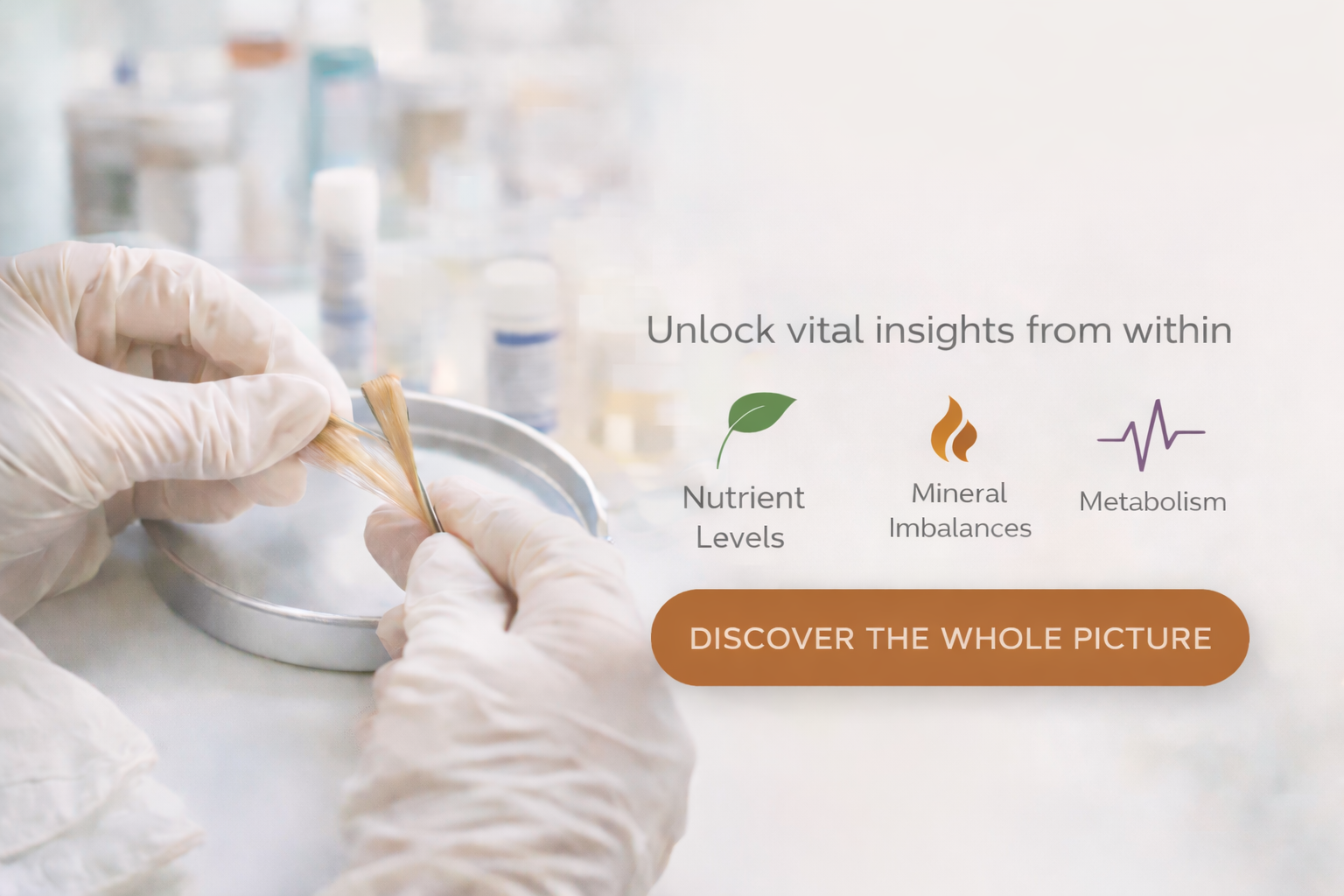
Hair Tissue Mineral Analysis (HTMA) uses a small sample of hair to assess mineral balance and potential toxic element exposure within the body. The results can reveal underlying patterns that may be affecting energy, stress resilience, metabolism and overall wellbeing, helping to guide a more personalised approach to health.